
Teacher Edition | Globetracker Week 4 Map
Week of November 12, 2023
Right click and SAVE AS
to download the Google Earth file for this episode
Use free Google Earth software
to OPEN it, using File> Open.
Find more tech info here.
Coal 4 U in WV former Pres. Clinton 1st name with "son"
Meri and I thought about that clue (and looked at a detailed map). The abbreviation WV stands for a state. It must start with a "W" - Wyoming, Wisconsin, Washington, or West Virginia. What do you all think? Hmm - if it is a WV, must be West Virginia (W for West, V for Virginia). Now onto the 2nd part of this clue, the former president was Bill (or William) Clinton. If you add a "son," it would either be Williamson or Billson. Look at the map (below) and see if you can find either of these cities on the map of West Virginia.
- Geo
Map of West Virginia
This map shows many of the smaller cities and towns of West Virginia. Can you find Williamson or Billson? Is the town on the eastern or western side of the state? What states border West Virginia (click to see the map of the entire US)?
Holy Idaho! For a town that neither Geo nor I had ever heard of, Williamson is fascinating! Have you ever heard of the town? Well, based on Louie's clue and our research, we definitely know why Louie is here: Coal. I wonder if Louie thinks coal is a good or bad source of energy. What do you think? We learned so much about coal today. Is coal a renewable resource, a fossil fuel or something else? In West Virginia, about 91% of the generated electricity comes from coal! Wow!! In the US, about 19% of electricity comes from coal. In fact, 18 states (in the US) use coal as their main source of electricity. I never knew we used so much coal. In West Virginia, there are 55 counties, and 28 of those counties have/produce coal! We have heard a lot about coal seams, but we aren't sure what that means - - yet. Do any of you know what a coal seam is? Tomorrow morning we are going to visit the largest coal mine in Williamson. We hope to learn more about coal and possibly get some leads about Louie! Then tomorrow afternoon we are going to the "Coal House." I am not really sure what the Coal House is, but it is on the list for the National Register of Historic Places. I surely hope they know what a coal seam is.
Txt from Pandora -
Hey U2. Is coal a renewable resource? Also, do the ppl who work in coal mines face dangers from being around coal 24/7? What r mines like?
Txt to Pandora -
Will answer ur Qs in r blog 2moro
- Meri
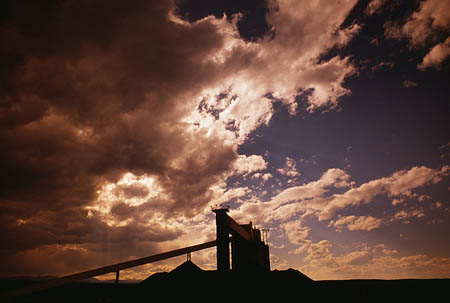
A coal mine in the distance
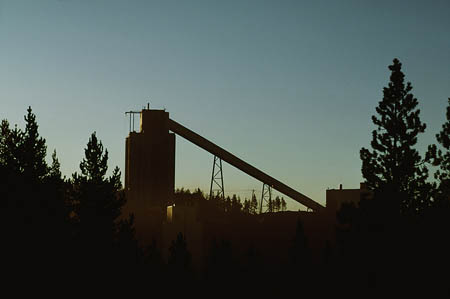
Coal mine
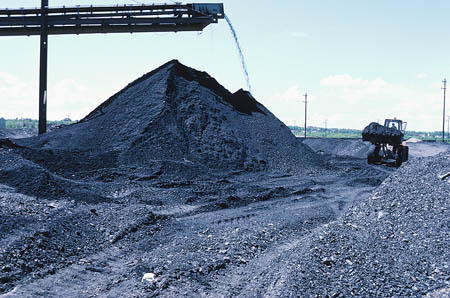
Another coal mine (closer view)
Now onto Pandora's Questions: Coal is NOT a renewable resource because it will all eventually disintegrate, disappear, or be used up. Coal can take millions of years to produce. The earth does not "renew" the supply when we take it out. This is probably why Louie was here, trying to convince the mines to stop using up all the coal reserves. What do you think?
To answer the second question requires some explanation. Yes, there are some dangers in working in the coal mines. But it really depends on WHERE you work. Each mine really does have different working conditions. Some of the more dangerous mines have high levels of methane gas (something that is very dangerous to inhale), constant flooding possibilities, falling rock, the possibility of hurting yourself physically with cuts or burns, and many others. You can also breathe a lot of coal dust. So YES - it can be very dangerous. But thankfully most mines take proper precautions to protect their employees. I included a link to learn more about the dangers (and precautions) within a coal mine. Take a look.
- Geo
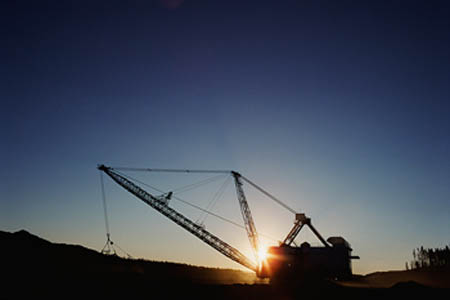
The coal mine we visited
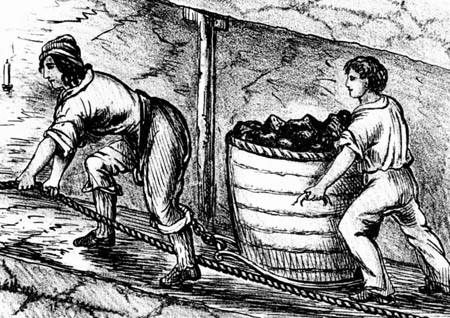
Here is a neat drawing we saw that shows what coal mines were like in the early 1900s.
History of Energy - Coal
Learn more about the history of coal and mine safety using this site.
Oops, you missed me yet again, I had to get moving onto my next stop. Come to where the water ends. I am visiting the desert and a famous dam. I am close to Las Vegas, can you figure out where I am?
- Geo
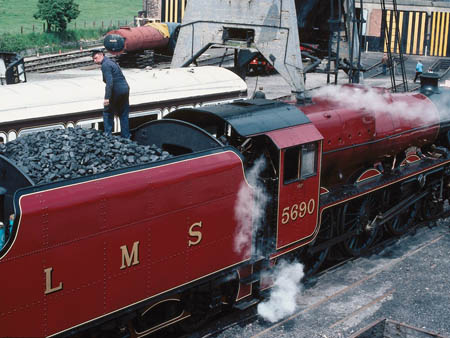
The train (which runs on COAL) that we took to Cinderella.
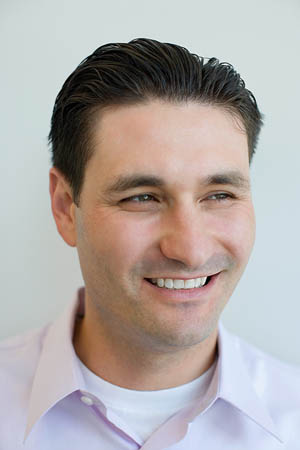
Finally - a picture of Louie!
coal mine - a place where coal is removed from the earth.
coal seam - a stratum (or wide layer) of coal that is thick enough to be mined to make a profit.
coal seams - stratums (or wide layers) of coal that are thick enough to be mined to make a profit.
fossil fuel - a non-renewable energy source that was formed a LONG time ago (300 million years) from the remains of plants and animals. There are three main forms of fossil fuels: oil, natural gas, and coal.
renewable resource - any natural resource that can be replenished naturally within a relatively short time. Examples include wood or solar energy.
Back to top
Grade 3-5: Knows the basic elements of maps and globes (title, legend, cardinal, scale, grid, meridians, time zones, etc.).
Grade 3-5: Knows major physical and human features of places as they are represented on maps and globes. Knows how to read different maps: road, relief, globe, etc..
Grade 6-8: Understands distributions of physical and human occurrences with respect to spatial patterns, arrangements, and associations (e.g. why some areas are more densely settled than others).
Grade 6-8: Knows the human characteristics of places (e.g., cultural characteristics such as religion, language, politics, technology, family structure, gender; population characteristics; land uses; levels of development).
Grade 6-8: Knows the physical characteristics of places (soil, vegetation, wildlife, etc..).
Grade 6-8: Understands criteria that give a region identity (such as Amsterdam as a transportation center or the Sunbelt's warm climate and popularity with retired people).
Grade 3-5: Knows the physical components of Earth's atmosphere (weather and climate), lithosphere (land forms such as mountains), hydrosphere (oceans, lakes and rivers), and biosphere (vegetation and biomes).
Grade 3-5: Knows the similarities and differences in characteristics of culture in different regions (in terms of food, shelter, social organization and others).
Grade 3-5: Knows how and why people divide Earth's surface into political and/or economic units (e.g., states in the United States and Mexico; provinces in Canada; countries in North and South America; countries linked in cooperative relationships, such as the European Union).
Grade 3-5: Knows how communities benefit from the physical environment (e.g., people make their living by farming on fertile land, fishing in local water, working in mines; the community is a port located on a natural harbor, a tourist center located in a scenic or historic area, an industrial center with good access to natural resources).