
All Roads Lead to Rome - Engaging with Ancient Rome through Literature
Introduction | Background Knowledge | Activities | Extensions | Standards
Introduction
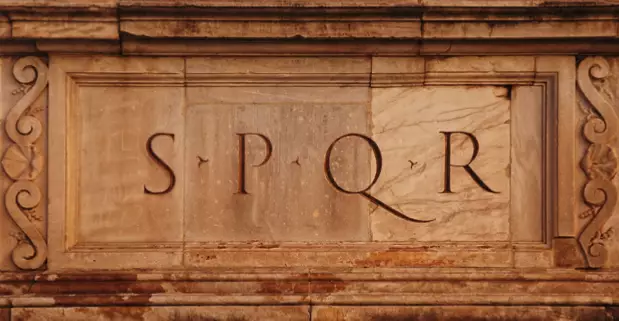
“To fiddle while Rome burns.” “Rome was not built in a day.” “When in Rome, do as the Romans do.” “All roads lead to Rome.” These are words that many Americans regularly use in conversation. They all come from Ancient Rome, which permeates our modern lives in many ways.

Click the image above to view a video that shows more about Ancient Rome.
Background Knowledge
According to myth, Rome was founded on April 21, 753 BCE. Twin brothers, Romulus and Remus, were born in central Italy along the banks of the Tiber River. The babies were descended from Mars, the god of war. The king demanded that they be drowned in the river, but they were saved and nursed by a she-wolf. When they came of age, Romulus and Remus founded their own city. The brothers argued over the city's location or name, and Romulus killed Remus; thus Rome was born.
The earliest Roman settlement was known as the Kingdom of Rome. Archaeologists date the village to its founding in the 8th century BCE, though it may be as old as the 10th century BCE. Romulus was the first king of Rome. The Senate elected the following six kings. There was not a hereditary line to the throne. Many kings were kind and gracious, but the seventh king, Lucius Tarquinius Superbus, known as Tarquin the Proud, was different from his predecessors. Historians remembered him as a cruel tyrant. When he was overthrown after a scandal in 509 BCE, the monarchy ended, and Rome transitioned to a Republic.
With the end of the monarchy in 509 BCE, the Romans looked to a new system. So they established a republic of elected officials, or magistrates, and other representative bodies. The Republic had a system of rules, norms, and customs recorded in a constitution. This constitution established a separation of powers and a system of checks and balances. Executive power was reserved for the highest-ranking elected officials, called consuls. They worked in tandem with the Senate, created as an advisory council, but grew in power and influence.
Gauls attacked the Romans during the 4th Century BCE. The Gallic army defeated the Romans outside the city and marched into Rome unchallenged. While most of the population had fled the city, some took refuge on Capitoline Hill to try to protect their city. The Gauls burned Rome and besieged the Capitoline Hill. The siege lasted 7 months, during which the Gauls offered peace in exchange for 1,000 pounds of gold. This gradually encouraged the Romans to take over other peoples living on the Italian peninsula. These conquests allowed the Romans to take control of the lands they conquered.
In the 3rd century BCE, the Carthaginians, an empire controlling the Mediterranean Sea, and the Romans began to clash over control of the sea. This conflict led to three major conflicts known as the Punic Wars. These wars spanned 115 years (from 264 BCE to 149 BCE) and led the Romans to develop a navy and a maritime strategy to defeat the strong Carthaginians at sea. By the end of the Second Punic War, the Romans had shifted their sights from Carthage to Greece and Hispania. When Carthage went to war with Numidia without Roman permission, Rome declared war on Carthage, starting the Third Punic War in 149 BCE. The Roman military destroyed Carthage, enslaved its people, and took control of the area, solidifying its power.
During the 2nd century BCE, the Romans conquered the Ancient Greeks, and the two cultures began to merge. After that success, Rome had very few adversaries in the region. Because there were no enemies abroad, conflict began inside the Roman government. The Senators continued to accumulate wealth at the expense of the soldiers and farmers. The Senators tried to maintain order by resorting to violence. The Gracchi Brothers, tribunes who tried to give land to common people, were killed, and the Senators reversed their work. This caused a greater divide between the classes.
In the mid-1st century, Rome had solidly split into two political factions. One was for the people, and the other wanted to maintain aristocratic control. Roman politics were in an era of chaos. From that chaos, Gaius Julius Caesar emerged as the leader. He brought two other men into his circle, calling themselves the First Triumvirate. Crassus was the richest man in Rome and built wealth as he enjoyed military command. Magnus (also known as Pompey), who was Caesar’s father-in-law, continued his role in the Senate. Caesar served as consul, the highest elected office in Rome, and commanded the military in Gaul. The First Triumvirate worked well together to lead Rome until the collaboration unraveled. When Caesar's wife died in childbirth, the relationship with Pompey deteriorated. Crassus was killed at the Battle of Carrhae. As Crassus had been the mediator between Caesar and Pompey, the two men began to jockey for control upon his death. Caesar invaded Rome and fought the Battle of Pharsalus, the first of many that would take power from the political faction that favored aristocratic rule. Pompey was killed in 48 BCE, leaving Caesar as the ultimate leader. On the Ides of March (March 15) of 44 BCE, Julius Caesar was assassinated by a group of Senators known as the Liberatores.
After Caesar’s assassination, Rome entered a period of turmoil. Marcus Antonius (Mark Antony) ruled the city until Caesar’s adopted son, Octavian, arrived. The two men, along with Caesar’s best friend, Marcus Lepidus, formed the Second Triumvirate in 43 BCE. During the five-year alliance, the Second Triumvirate executed any senator who was believed to be a supporter of the Liberatores. In 42 BCE, with Antony's support, the Senate deified Caesar, and Octavian became known as the Divi filius, son of the deity. The Triumvirate was set to expire in 38 BCE but was renewed for an additional five years. By that time, the relationship between Octavian and Antony had turned, and Lepidus defied Octavian and was forced to resign. Antony was living in Egypt with Cleopatra. Octavian considered this treason, and the two men fought at the Battle of Actium in 31 BCE. Egypt was decimated, Antony and Cleopatra committed suicide, and Rome conquered Egypt.
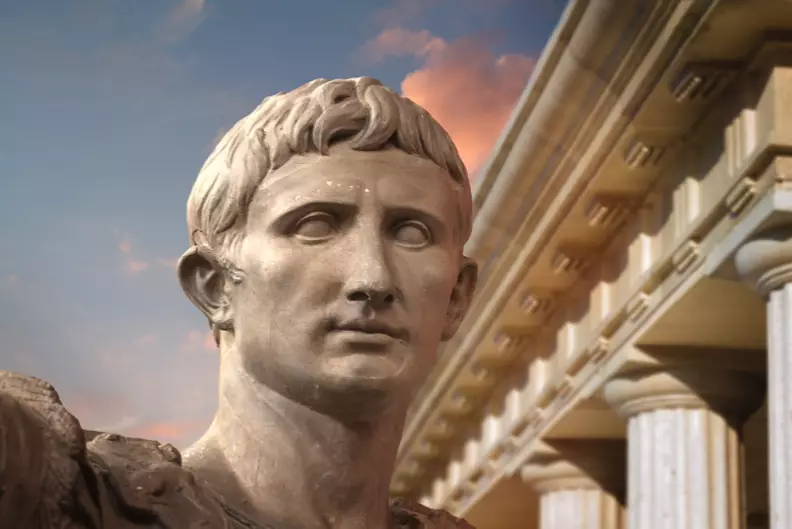
At the age of 36, Octavian was the sole ruler of Rome. He established the Julio-Claudian dynasty. In 27 BCE, he took the name Augustus. He consolidated all the ruling powers into a single position called the Princeps. His time was peaceful as he maintained total control. He limited the power and influence of the Senators and ruling class. He increased the wealth and impact of the equestrian class, the class just below the Senators. He created a standing army and stayed away from the battlefields, leaving any fighting to his military commanders. The time of relative peace allowed the arts to flourish, and the great Roman poets - Virgil, Ovid, Horace, and Rufus - emerged during Augustus’s reign. He also made changes to the calendar, and the month of August is named after him. He died in 14 BCE. The Julio-Claudian dynasty remained in power until Nero died in 68 CE.
The Flavian Dynasty came to power upon Nero’s death in 68 CE. The leaders of the Flavian Dynasty continued to expand Rome’s control of the region and maintained its strength. This dynasty led Rome for 28 years.
The Nerva-Antonine Dynasty (96 - 192 CE) was a time of peace for the Roman Empire. The emperor was chosen for his leadership qualities instead of his bloodline. Under Trajan in 117 CE, Rome was the largest it would be in terms of landholdings. The last emperor of the Nerva-Antonine Dynasty, Commodus, was killed in 192 CE.
193 CE was a time of transition for Rome. Known as the Year of Five Emperors, Rome saw a cycle of leaders, and the people were unhappy with how they were led. This was a time of war and conflict, both inside Rome and abroad. The turmoil continued. There were 26 emperors in 49 years. Many of the 26 emperors served only a short time and were more concerned with their own power and influence than with Rome's. The cost of the many military conflicts caused the economy to crash. The coin was devalued, and inflation came suddenly and quickly. With a new Emperor in 284 CE, the Crisis of the Third Century was finally overcome.
Emperor Diocletian came to power in 284 CE. He instituted a system of government called the Tetrarchy. In a Tetrarchy, control was divided among two senior emperors and their designated successors. Under the Tetrarchy, many capitals were established by its members. Diocletian also persecuted Christians, destroying many churches and forbidding worship. In 305 CE, Diocletian became the first Roman monarch to abdicate.
Constantine became a tetrarch in 306 CE. He went to war against other tetrarchs. In 313 CE, he issued the Edict of Milan. The Edict of Milan allowed Christians to worship freely. Constantine converted to Christianity, beginning Europe’s shift as well. After him, Julian came into power and moved the capital to Constantinople.
In the 4th and 5th centuries, Rome began its descent. Historians pinpoint 476 CE as the Fall of Rome. From 330 CE through the Fall of Rome, the civilization was constantly at war. The conflicts culminated in Romulus Augustulus's overthrow.
Rome was an independent civilization for 1200 years and a world power for 700 years. The culture left a legacy that is evident in many modern societies. Much of America’s government - the representative model, separation of powers, and the three branches of government - is modeled after the government of Rome. Many legal practices came from Rome. Latin is the foundation for the Romance languages, and English incorporates many Latin roots. Romance languages and English use the Roman alphabet. In the later years of the empire, Rome spread Christianity around the world, and it would become the seat of the Catholic Church.
ACTIVITIES
Explore TeachersFirst’s Special Topics Page of Ancient Rome resources (found here).
- Paolo, Emperor of Rome by Mac Barnett (ISBN 9781419741098)
- Paolo, the dog, has escaped from the hair salon where he lives. He runs around Rome, seeing the sights, enjoying his freedom. This book is great to introduce students to many sights in Rome and can be a springboard to the past.
- Write a postcard home from Paolo’s point of view! Ask students to add information that they learned about the various sights in Rome and their historical significance.
- Create a virtual travel guide of Ancient Rome using Genially (reviewed here), where students can record themselves sharing details about places to visit around the city/republic.
- Mac Barnett reads Paolo, Emperor of Rome here.
- Take a virtual field trip to Rome. The field trip includes a voice-over explaining what students are seeing.
- Go on a Webquest of Ancient Rome.
- Ancient Rome Inside Out by John Malam (ISBN 9780778728825)
- Take a Glimpse of Teenage Life in Ancient Rome (reviewed here) by visiting this TedEd talk.
- Have students compare and contrast teenage life in Ancient Rome with that of today by incorporating the Project Zero Thinking Routines Toolbox (reviewed here), which offers structured ways to consider different perspectives. Choose the Perspective Taking category to find resources to incorporate thinking routines such as Step In, Step Out, Step Back and See, Think, Me, We.
- Mr. Donn’s Social Studies (reviewed here) has excellent cross-curricular activities including Ancient Rome for Kids (reviewed here), Ancient Rome for Teachers (reviewed here), and Ancient Rome - Myths and Legends for Kids and Teachers (reviewed here).
- Construct an aqueduct or learn more about the Roman Baths from NOVA Online!
- Explore Ancient Roman pastimes including shows and public events, ball games, and music.
- Play Chalk Games Inspired by the Ancient Romans to find similarities between modern games such as chess and tic-tac-toe.
- Vacation Under the Volcano by Mary Pope Osborne (ISBN 9780679890508)
- Jack and Annie find themselves in Ancient Rome when Mt. Vesuvius is about to erupt!
- Check out this teacher's guide for Vacation Under the Volcano.
- Learn more with the Magic Tree House Fact Tracker: Ancient Rome and Pompeii (ISBN 9780375832208)
- Introduce or review Latin roots with this Latin Isn’t Dead activity.
- Build a Volcano - Construct an erupting volcano using an empty plastic bottle, sand, baking soda, and vinegar. It is a fun, hands-on way to visualize the eruption that buried the city. Directions are included in the TeachersFirst Lesson Plan "Volcano" (reviewed here).
Videos
- Learn All About the History of the Ancient Roman Empire for Kids by Learn Bright
- Ancient Rome in 20 Minutes by Arzamas
- An Overview of Ancient Rome by Khan Academy
- Visualizing Imperial Rome by Khan Academy
- Ancient Rome for Kids by Homeschool Pop

EXTENSIONS
Hall of Fame
- Research the Roman Gods and Goddesses. Compare them to their Greek counterparts. Discuss any similarities and differences.
- Use an interactive Venn Diagram creation tool such as Superstructures (reviewed here) to foster discussion and collaboration as part of your thinking process.
- Instead of a Venn Diagram, use Circlyapp (reviewed here) to organize comparisons with brightly colored, circle-based visuals that outline key ideas and help students stay focused and engaged.
- Have students present their god or goddess. (Consider taking it a step further and have them dress the part!) After the presentations, students work in pairs or small groups to place each Roman or Greek God or Goddess on a Wall of Fame or a Wall of Shame.
- Add interest to student presentations by including a QR code generated with QR Code Monkey (reviewed here) linking to a short podcast about their god or goddess. Choose a free podcast creation tool from those featured on TeachersFirst Special Topics Page: Podcast Creators (reviewed here).
Ancient Roman Art
- Paper and digital Mosaics - Romans famously decorated their villa floors and public baths with detailed mosaic art.
- Technology Approach - Create a digital mosaic using Make a Roman Mosaic (reviewed here).
- Nontechnology Approach - Practice pattern recognition and fine motor skills by cutting colorful construction paper into small square tiles and gluing them onto a template to form geometric designs, animals, or Roman borders.
Ancient Rome Podcasts
- Listen to the podcast series An Ancient Guide to Ancient Rome (reviewed here), which includes dozens of episodes telling the story of Ancient Rome. Additional information on the site includes a map of locations of featured Roman sites, book recommendations, and more.
- Instead of asking students to listen to all podcasts, assign students or small groups a podcast to listen to and share their findings with the class.
- Use information from Student Podcast Notes: A Practical Guide to understand how to teach with podcasts and find suggestions for student note-taking.
CORRELATION TO STANDARDS
-
AASL National School Library Standards
- Inquire Shared Foundation, Think Domain - Learners display curiosity and initiative by:
- 1. Formulating questions about a personal interest or a curricular topic.
- 2. Recalling prior and background knowledge as context for new meaning.
- Inquire Shared Foundation, Share Domain - Learners adapt, communicate, and exchange learning products with others in a cycle that includes:
- 1. Interacting with content presented by others.
- 2. Providing constructive feedback.
- 3. Acting on feedback to improve.
- 4. Sharing products with an authentic audience.
- Include Shared Foundation, Share Domain - Learners exhibit empathy with and tolerance for diverse ideas by:
- 1. Engaging in informed conversation and active debate.
- 2. Contributing to discussions in which multiple viewpoints on a topic are expressed.
- Include Shared Foundation, Grow Domain - Learners demonstrate empathy and equity in knowledge building within the global learning community by:
- 1. Seeking interactions with a range of learners.
- Engage Shared Foundation, Think Domain: Learners follow ethical and legal guidelines for gathering and using information by:
- 1. Responsibly applying information, technology, and media to learning.
- 2. Understanding the ethical use of information, technology, and media.
- Engage Shared Foundation, Create Domain: Learners use valid information and reasoned conclusions to make ethical decisions in the creation of knowledge by:
- 1. Ethically using and reproducing others’ work.
- 2. Acknowledging authorship and demonstrating respect for the intellectual property of others.
- 3. Including elements in personal-knowledge products that allow others to credit content appropriately.
- Engage Shared Foundation, Grow Domain: Learners engage with information to extend personal learning by:
- 1. Personalizing their use of information and information technologies.
- 2. Reflecting on the process of ethical generation of knowledge.
- 3. Inspiring others to engage in safe, responsible, ethical, and legal information behaviors.
- Collaborate Shared Foundation, Think Domain - Learners identify collaborative opportunities by:
- 1. Demonstrating their desire to broaden and deepen understandings.
- 2. Developing new understandings through engagement in a learning group.
- 3. Deciding to solve problems informed by group interaction.
- Collaborate Shared Foundation, Create Domain - Learners participate in personal, social, and intellectual networks by:
- 1. Using a variety of communication tools and resources.
- 2. Establishing connections with other learners to build on their own prior knowledge and create new knowledge.
- Collaborate Shared Foundation, Grow Domain - Learners actively participate with others in learning situations by:
- 2. Recognizing learning as a social responsibility.
- Explore Shared Foundation, Think Domain - Learners develop and satisfy personal curiosity by:
- 1. Reading widely and deeply in multiple formats and writing and creating for a variety of purposes.
- Explore Shared Foundation, Create Domain - Learners construct new knowledge by:
- 1. Problem solving through cycles of design, implementation, and reflection.
- Explore Shared Foundation, Share Domain - Learners engage with the learning community by:
- 3. Collaboratively identifying innovative solutions to a challenge or problem.
- Explore Shared Foundation, Grow Domain - Learners develop through experience and reflection by:
- 1. Iteratively responding to challenges.
- 2. Recognizing capabilities and skills that can be developed, improved, and expanded.
- 3. Open-mindedly accepting feedback for positive and constructive growth.
- ISTE Standards for Students
- Empowered Learner 1.1
- 1.1.b. Students build networks and customize their learning environments in ways that support the learning process.
- 1.1.c. Students use technology to seek feedback that informs and improves their practice and to demonstrate their learning in a variety of ways.
- Digital Citizen 1.2
- 1.2.c. Demonstrate an understanding of and respect for the rights and obligations of using and sharing intellectual property.
- Knowledge Constructor 1.3
- 1.3.d. Students build knowledge by actively exploring real-world issues and problems, developing ideas and theories, and pursuing answers and solutions.
- Innovative Designer 1.4
- 1.4.d. Students exhibit a tolerance for ambiguity, perseverance, and the capacity to work with open-ended problems.
- Global Collaborator 1.7
- 1.7.c. Students contribute constructively to project teams, assuming various roles and responsibilities to work effectively toward a common goal.